Design
3 useful instruments to enable your Agentic UX turn user intent into business outcomes


Why healthcare UX starts long before the first screen, and why domain expertise matters just as much as design expertise.

AI-assisted workflows, connected healthcare ecosystems, cloud-native platforms, and advanced diagnostic solutions are transforming how healthcare professionals access information, make decisions, and deliver care.
At the same time, healthcare organizations face growing pressure to modernize legacy systems, improve efficiency, and create better experiences for both clinicians and patients.
In this environment, engineering excellence and product innovation often take center stage. Yet one discipline frequently enters the conversation later than it should: UX.
The common perception is that UX designers create screens, prototypes, and interface components. While those deliverables are important, they represent only a fraction of the value UX brings to a healthcare product.
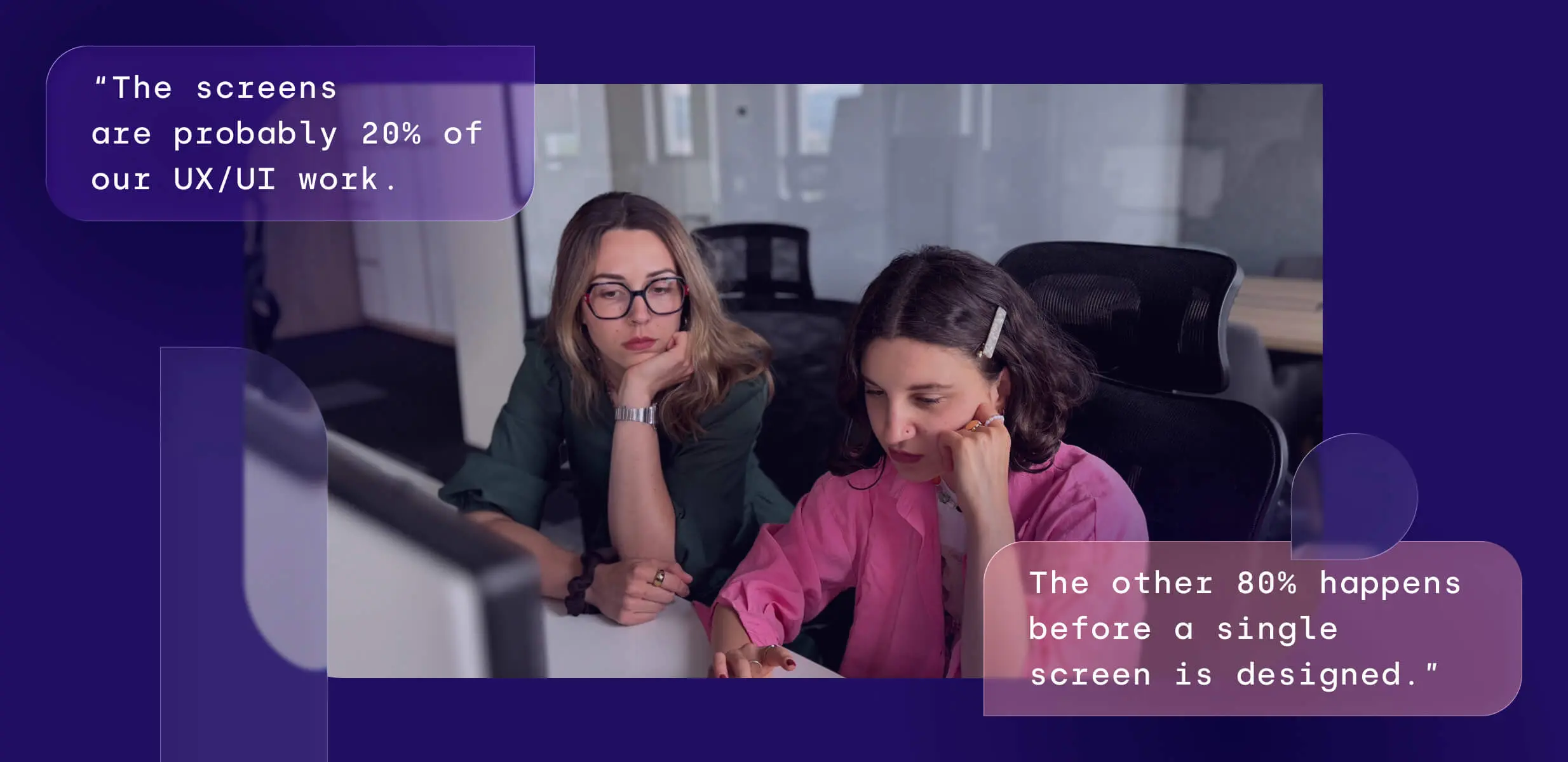
The screens are probably 20% of our work. The other 80% happens before a single screen is designed.

That’s how Diana Tashkova, Senior UX/UI Designer at Resolute Software, describes the role of UX in modern healthcare product development.
The insights in this article are drawn from Diana's experience designing and validating digital experiences for a global manufacturer of diagnostic imaging and radiopharmaceutical products.
These perspectives have also been shaped by years of work across a diverse portfolio of healthcare solutions. Resolute's UX team has collaborated with product managers, clinicians, application specialists, support teams, and engineering stakeholders on a variety of initiatives ranging from diagnostic imaging and mobile-first ultrasound assessments to telemedicine applications, patient data access platforms, healthcare interoperability solutions, hospital operations systems, chronic disease management resources, healthcare analytics tools, and AI-assisted healthcare experiences.
This experience has reinforced something that healthcare organizations increasingly recognize: great healthcare UX requires more than design expertise alone. It requires healthcare domain expertise.
Clinical workflows, regulatory requirements, cognitive load, time-sensitive decision-making, and patient safety considerations all influence how products should be designed. Understanding these realities requires deep familiarity with the environments in which healthcare professionals work every day.
Many product teams understand the role of developers, architects, quality assurance specialists, and product managers.
But what about UX designers?
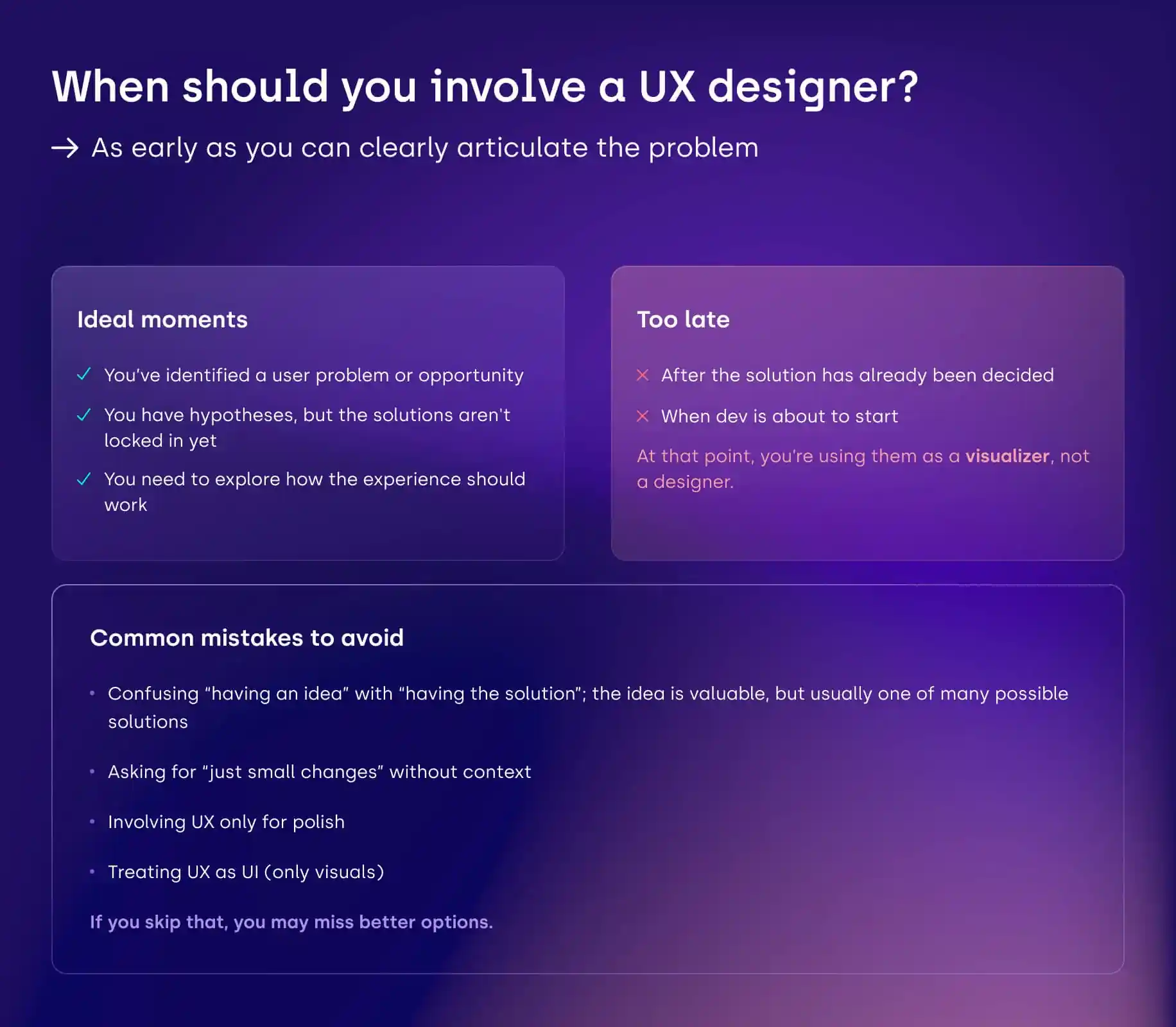
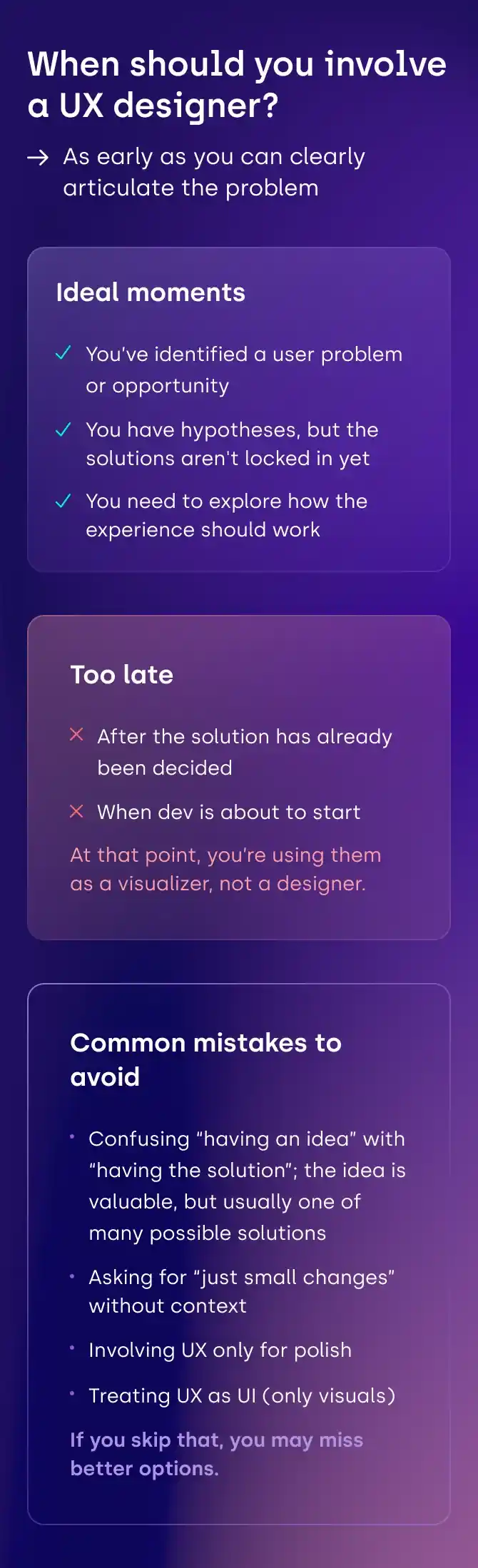
Designers are often invited into conversations after a solution has already been defined. The request usually sounds familiar:
“Can you add another button here?”
“Can you create a few screens for this workflow?”
“Can you mockup this idea?”
The problem is that by this stage, many of the most important decisions have already been made. The UX team is no longer helping solve the problem. They are helping visualize a predetermined solution.
In healthcare technology, this approach often leaves significant value on the table. The most impactful UX work rarely starts with a screen. It starts with understanding people, workflows, environments, and the realities of how healthcare professionals interact with technology.
Healthcare software is different. Healthcare professionals do not interact with software in a controlled environment.
A clinician performing routine pregnancy monitoring typically works within a structured workflow, with dedicated time for examinations and documentation. An emergency department specialist performing a point-of-care ultrasound operates in a completely different reality. They may be managing urgent cases, collaborating with trainees, documenting findings under time pressure, and making decisions while multiple activities compete for their attention.
These differences matter.
A workflow that feels intuitive in one clinical context may become a source of friction in another. Designing for healthcare, therefore, requires more than applying standard UX principles. It requires understanding the environment in which decisions are made and the pressures under which users operate.
Healthcare UX is not simply about making interfaces intuitive. It is about understanding why a workflow exists, how clinical decisions are made, what information is needed at each stage of the process, and what consequences may arise when friction is introduced into the experience. Without that context, even well-established UX patterns can yield elegant solutions that fail to support real-world healthcare workflows.
This complexity is particularly evident in diagnostic imaging environments, where clinicians must interpret large volumes of information, document findings accurately, navigate specialized workflows, and make time-sensitive decisions. Designing software for these environments requires a detailed understanding of how healthcare professionals interact with technology throughout the diagnostic process, not just with an interface.
The challenge is not simply helping users complete a task. The challenge is supporting clinical decision-making while reducing cognitive effort, minimizing unnecessary interactions, and ensuring critical information is available at the right moment.
In healthcare, poor UX is rarely just an inconvenience.
An overlooked warning, a confusing workflow, or an unintuitive navigation pattern can contribute to delays, increase cognitive burden, and create opportunities for error. While clinicians ultimately make the decisions, the systems supporting them play a significant role in how efficiently and confidently those decisions can be made.
This is why healthcare UX is increasingly viewed as a contributor to both operational efficiency and patient safety.
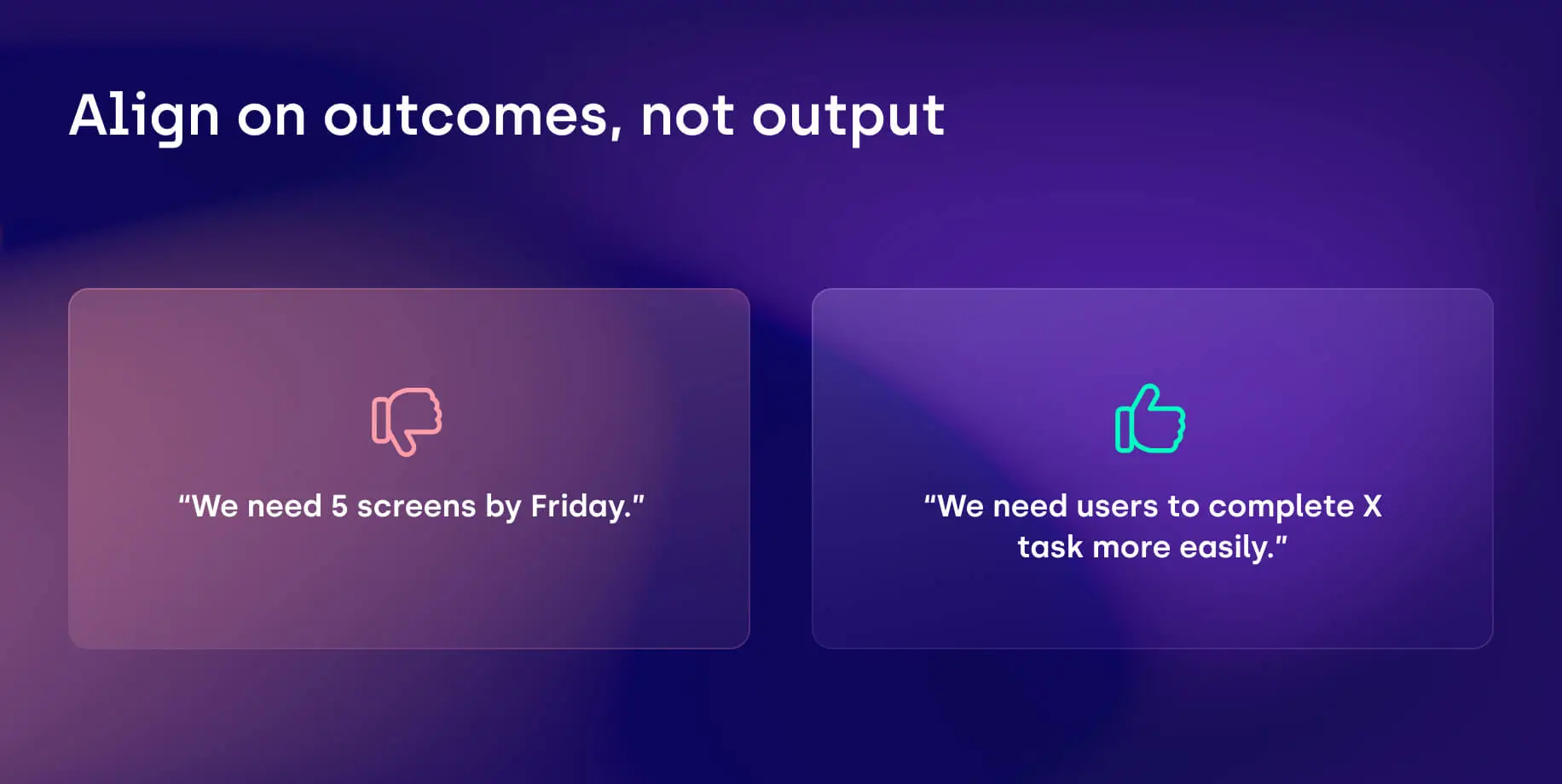
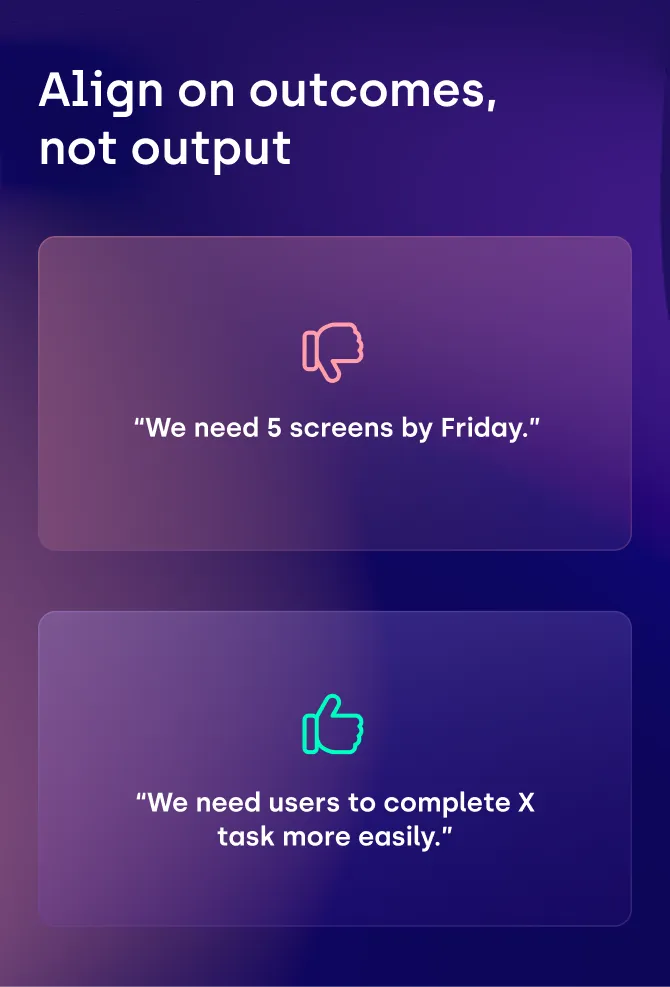
One of the most common patterns product teams fall into is presenting a proposed solution before fully exploring the problem.
For example:
“We need another button here.”
“We should add five new screens.”
“We need a step-by-step wizard.”
These ideas may eventually become part of the solution. But they are not the starting point. The starting point is understanding:
What problem are users experiencing?
Who is affected?
When does it happen?
What business outcomes are impacted?
What constraints must be considered?
This problem-first mindset is one of the foundational principles of Design Thinking. By focusing on user needs before proposed solutions, teams are more likely to uncover root causes rather than simply treating symptoms. In complex healthcare environments, that distinction can significantly influence adoption, efficiency, and long-term product success.
When teams start with the problem, they create space for exploration. When they start with the solution, they often limit innovation before it begins.
A UX designer might discover that the issue is not the button's visibility at all. The real issue could be workflow structure, onboarding design, information architecture, or a process that requires too many steps.
In healthcare, where workflows involve clinical, operational, technical, legal, and regulatory considerations, those distinctions matter.
One reason UX creates the most value at the beginning of a project is that designers approach product development differently than many teams expect.
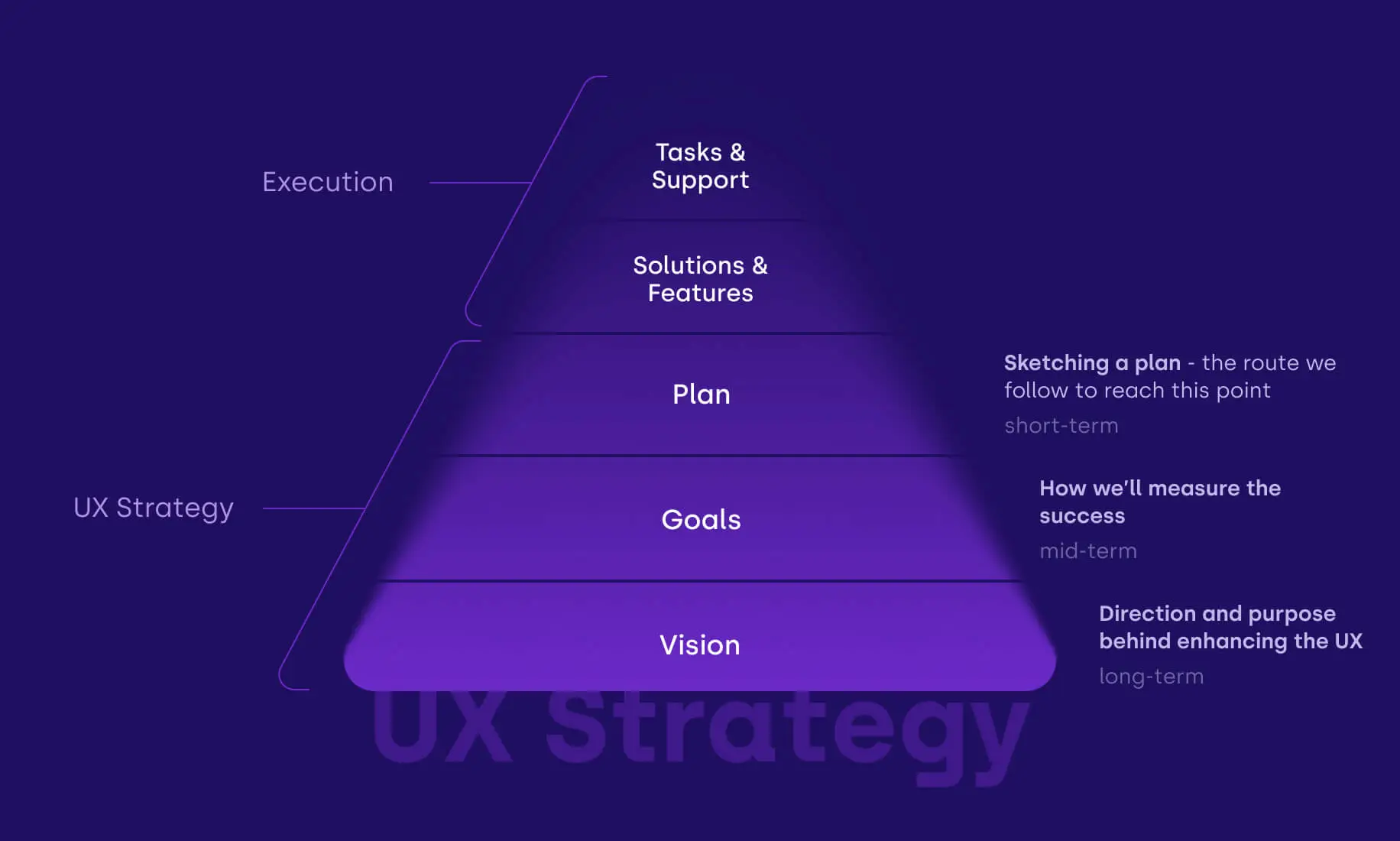
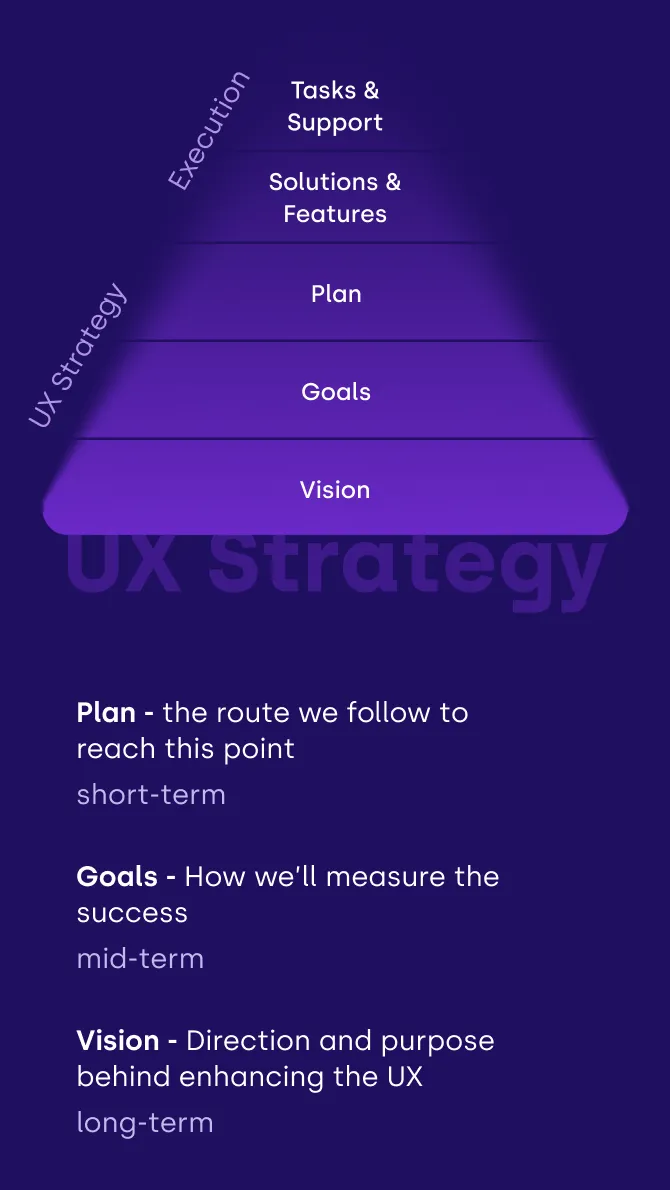
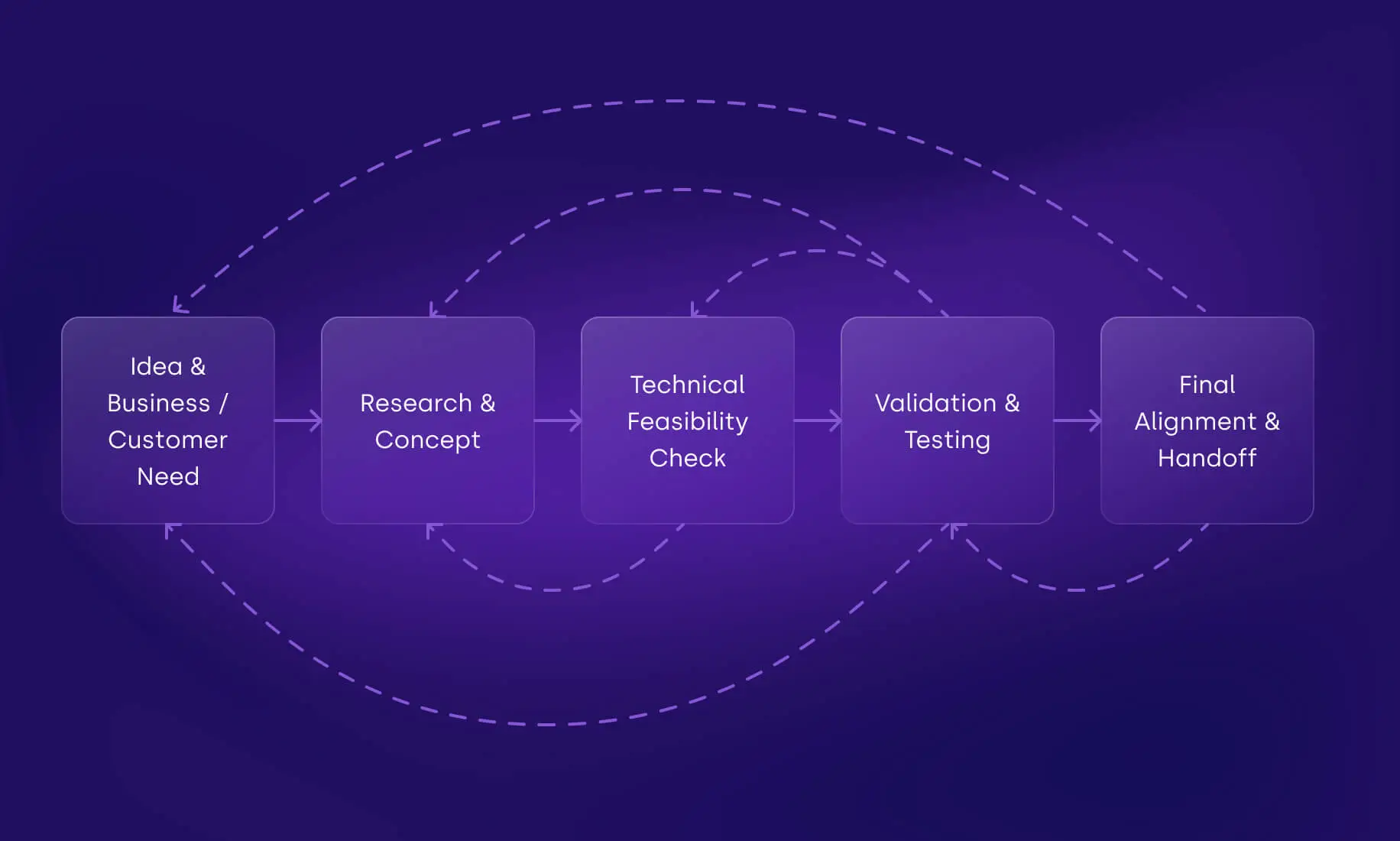
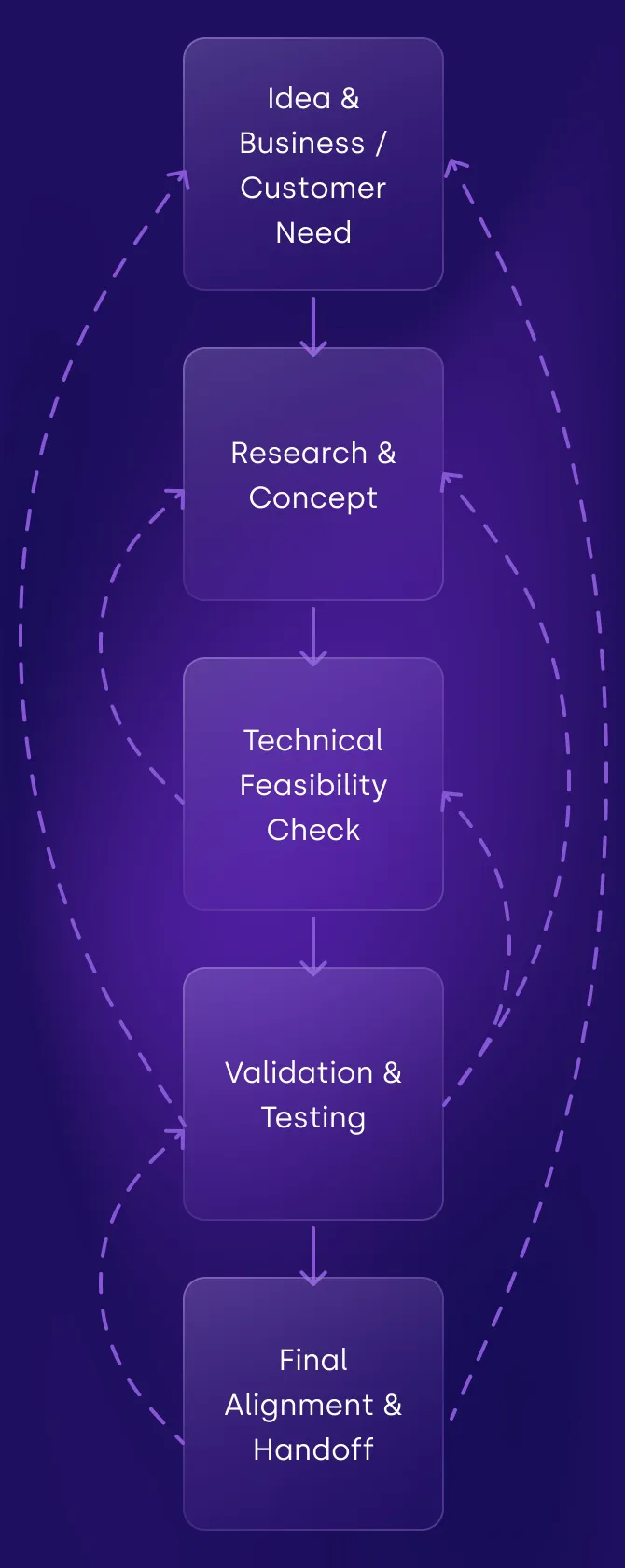
Rather than moving linearly from requirements to implementation, UX teams typically work within a Design Thinking framework, an iterative methodology centered around understanding users, defining problems, exploring solutions, testing assumptions, and continuously refining ideas based on feedback.
According to the Interaction Design Foundation, Design Thinking is not a sequence of rigid steps but a flexible process that allows teams to move back and forth between stages as new information emerges. Similarly, Figma describes Design Thinking as a human-centered approach to innovation that prioritizes understanding user needs before jumping to solutions.
This closely reflects how healthcare products are developed in practice.
A workflow that appears effective during initial discussions may reveal hidden challenges during user research. A concept that performs well in testing may expose technical constraints during implementation. Feedback from clinicians may require teams to revisit assumptions that seemed settled weeks earlier.
For UX teams, this is not a sign that the process is failing. It is a sign that the process is working.
One advantage of combining UX expertise with healthcare domain expertise is the ability to identify inefficiencies that may be invisible to others.
Working alongside teams responsible for diagnostic imaging and healthcare software development has reinforced a recurring observation: some of the most significant UX opportunities aren’t found in entirely new features. They arise from rethinking workflows that users have learned to tolerate over time.
One example emerged during the migration of a long-established healthcare workflow from a desktop environment to a modern web application.
Users had become accustomed to navigating multiple layers of interactions simply to access customization settings. Because the process had been in place for years, most users no longer questioned it. They accepted the additional clicks as part of their daily routine.
However, when the workflow was examined through a UX lens by Diana and her colleague from Resolute, Rada, it became clear that the complexity was not required. It was simply inherited from the legacy experience.
By stepping back and re-evaluating the underlying user goal rather than replicating the existing interface, the team proposed a significantly different approach that reduced friction and better aligned with how clinicians actually worked.
The lesson was simple: users often learn to work around inefficient processes. That does not mean the inefficiencies should remain. Good UX is about identifying and removing unnecessary complexity.
One of the most important lessons healthcare product teams learn is that assumptions are only the starting point. User validation often uncovers nuances, constraints, and opportunities that may not be visible during planning and design discussions.
This became particularly evident during user validation sessions for an AI-assisted healthcare feature. The assumption was that additional AI capabilities would further streamline clinicians’ workflows and create meaningful value.
The feedback told a different story. Many of the tasks the feature aimed at optimizing had already become sufficiently efficient within existing processes. The anticipated benefits were far smaller than originally expected.
Rather than continuing development based on assumptions, the team used this feedback to reassess the direction of the initiative. The outcome was not simply a better user experience. It was a better business decision.
Healthcare UX is often most valuable when it prevents organizations from investing in solutions that solve the wrong problem.
Another often overlooked source of UX insight comes from support and application specialist teams.
These teams interact with users daily. They see recurring frustrations, identify patterns in feedback, and often understand workflow challenges long before they appear in product roadmaps.
In healthcare environments, where products are deeply embedded in clinical operations, these perspectives can be invaluable. Some of the most impactful design improvements emerge not from feature requests but from conversations with the people helping users navigate the system every day.
For UX teams, these interactions provide context that cannot be captured solely through analytics. They reveal how products behave in real-world settings, where competing priorities, technical limitations, and operational pressures shape user behavior.
Perhaps the most important shift healthcare organizations can make is changing how they view UX.
Not as a service. Not as a final checkpoint. Not as a team responsible for making interfaces look polished.
But as a product partner.
When designers are involved early, they contribute to problem definition, workflow design, user research, validation, risk identification, stakeholder alignment, feature prioritization, and continuous product improvement.
The screens still matter. The prototypes, too.
But those deliverables are simply the visible outcome of much deeper thinking.
Modern UX responsibilities also extend beyond usability alone. Teams must consider accessibility, inclusivity, compliance requirements, and the diverse ways users interact with digital products. In healthcare environments especially, ensuring experiences are accessible is not simply a best practice.
It is an important part of creating products that can be effectively used by a broad range of people. As part of this broader UX perspective, Resolute also helps organizations evaluate and improve digital accessibility through its Web Accessibility Assessment.
The real value lies in helping organizations understand what should be built, why it matters, and how it fits into the realities of healthcare delivery.
As AI becomes increasingly embedded into healthcare products, UX designers are also being asked to define how intelligent systems interact with users, communicate uncertainty, and support decision-making.
These challenges extend beyond traditional interface design and into the emerging field of Agentic UX. In our recent article, 3 Useful Instruments to Enable Your Agentic UX to Turn User Intent into Business Outcomes, we explore how organizations can design AI-powered experiences that balance automation, trust, transparency, and human oversight, capabilities that are becoming increasingly important across healthcare technology ecosystems.
As products become more powerful, the challenge is no longer adding functionality. It is about ensuring that functionality works for the people who depend on it.
That combination of UX and healthcare domain expertise enables teams to move beyond designing interfaces to designing experiences that support better workflows, better decisions, and ultimately better outcomes.