Technology Strategy
AI Governance in the SDLC: 6 Controls for AI-Assisted Development


Choosing a mobile development framework isn't just a technical decision. It's a business one.

If your organization is gearing up to build a mobile app, you've likely run into a question that product and engineering teams wrestle with all the time:
This decision carries weight because it shapes more than just how the app gets built. It influences how fast you can launch, how productive your engineering team is day to day, how much work it takes to keep the app running smoothly over time, and how easily you can keep improving it as your business grows.
React Native has emerged as one of the top choices for cross-platform mobile development for many organizations. Even so, and despite the framework's maturity, misunderstandings persist. Some treat it mainly as a cost-cutting tool, while others assume it inevitably means sacrificing quality compared to native builds.
Neither view captures the whole picture.
React Native won't be the right fit for every app. But that doesn't make native development the automatic winner either.
The real question isn't which technology is "best" in the abstract. It's which one best fits your product's goals, your users' expectations, and your company's long-term direction.
That reframing changes everything about how the decision should be made.
Rather than asking whether React Native is "good enough," organizations should be asking:
For a large share of applications, the answer is yes.
This guide looks at why React Native has risen to become one of the most widely used mobile frameworks today, where it shines, where native development might still make more sense, and what's involved in successfully shipping a React Native app.
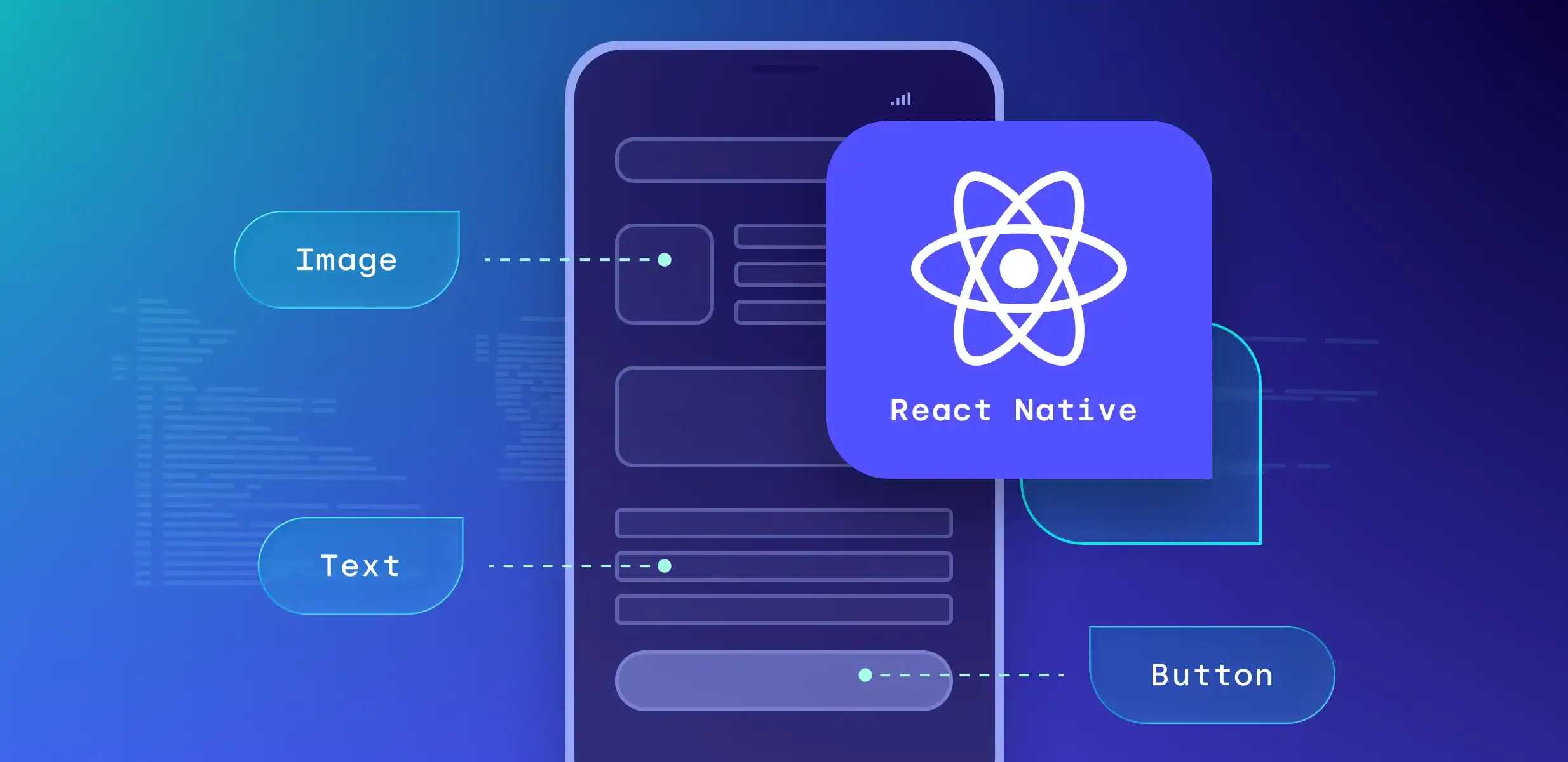
React Native lets teams build iOS and Android apps from one shared codebase while still rendering native UI components.
Today's React Native offers the performance, security, and scalability that most enterprise applications need.
React Native fits well for many business applications, though it isn't the right call for every project.
The choice between React Native and native development comes down to your app's requirements, long-term upkeep, and business goals.
Following a structured process, from defining the product through launch and ongoing improvement, lowers project risk and sets the stage for lasting success.
Frequently asked questions
Back when Facebook (now Meta) first started putting serious investment into mobile, the company leaned heavily on HTML-based apps. That approach made code reuse possible, but it came at a cost: slow performance and a user experience that lagged well behind native apps. Facebook's engineers needed a way to hold onto JavaScript's development speed without giving up the responsiveness that native mobile users expect.
React Native was the answer.
Facebook open-sourced React Native in 2015, introducing a fresh take on cross-platform development. Rather than rendering web views, it used genuine native UI components while still letting developers write their apps in JavaScript. That combination gave businesses quicker development timelines, a shared codebase across iOS and Android, and reduced long-term maintenance costs.
In the years since, React Native has grown well past its original scope. Its open-source ecosystem now includes thousands of production-ready libraries, and companies like Microsoft, Shopify, Coinbase, Discord, and Meta itself have all built large-scale applications on it.
One of the framework's biggest turning points was the arrival of its New Architecture.
With the introduction of the JavaScript Interface (JSI), the Fabric rendering system, TurboModules, and the Hermes JavaScript engine, React Native cut down substantially on the communication overhead between JavaScript and native code. The payoff is quicker app startup times, smoother animations, better memory efficiency, and stronger performance across the board.
React Native today is a mature framework built for enterprise use, capable of supporting apps across sectors like e-commerce, healthcare, fintech, enterprise software, social networking, and AI-driven mobile experiences. Increasingly, the question organizations ask isn't whether React Native is "good enough." It's whether it can deliver what they need while making development and maintenance simpler.
It's also worth being clear about what React Native is, and isn't.
Being a cross-platform framework doesn't mean every single line of code gets shared between platforms automatically. Certain advanced, platform-specific features may still call for native modules or platform-specific code. React Native's guiding principle has always been "Learn once, write anywhere," not "Write once, run everywhere."
The good news is that React Native has one of the largest, most mature open-source ecosystems in mobile development behind it. Thousands of community-built libraries already cover things like authentication, payments, maps, camera functionality, biometrics, and many other common mobile needs. That means most business apps can share the bulk of their codebase across iOS and Android, bringing in native code only where a platform-specific capability genuinely requires it.
Picking a mobile development framework is almost never just a technical decision.
Organizations have to weigh development speed, user experience, long-term upkeep, and total cost of ownership, all while making sure the technology they pick can actually support what the product needs to do.
React Native has grown into one of the most popular cross-platform frameworks around because it lets organizations ship high-quality apps faster without giving up the native feel users expect.
Modern React Native handles performance needs comfortably for the large majority of business applications.
Recent architectural upgrades, including the New Architecture, Fabric, TurboModules, JSI, and the Hermes JavaScript engine, have cut down significantly on the back-and-forth between JavaScript and native code. The result is faster startup times, smoother animations, better memory usage, and an overall more responsive experience.
Native development still holds an edge for highly graphics-intensive work like advanced 3D games or real-time video processing. But for apps in categories like e-commerce, healthcare, enterprise software, fintech, marketplaces, and social platforms, React Native delivers performance that feels fully native to users while still enabling much faster development.
Security comes down far more to application architecture and development practices than to the framework itself.
React Native supports the same platform-level security features available to native apps, including biometric authentication, encrypted storage, secure networking, certificate pinning, and hardware-backed key management.
Apps in tightly regulated industries like healthcare, finance, or government may need extra native integrations or additional security hardening. But with the right architecture and implementation, React Native is fully capable of meeting enterprise-grade security requirements.
Scalability, too, depends much more on application architecture than on the framework itself.
React Native has already proven it can support applications with millions of users. Modern tooling, modular architecture, mature state-management libraries, automated testing, and solid CI/CD pipelines all make it a strong fit for long-term product development. As an app grows, teams can bring in native modules selectively wherever extra performance or platform-specific features are needed, without giving up the benefits of a shared codebase.
React Native lets organizations build and maintain a single mobile codebase for both iOS and Android, cutting down on duplicated engineering work and simplifying maintenance over the long run.
Development teams also get the benefit of a mature ecosystem, reusable components, fast refresh, extensive testing frameworks, and a large talent pool to draw from. Together, these advantages help organizations get products to market faster, iterate more often, and lower the overall cost of ownership across the app's lifecycle.
React Native should be chosen because it fits what a product actually needs, not for its own sake.
For many business applications, it strikes an excellent balance between productivity, flexibility, and long-term maintainability.
E-commerce, news, and business applications
React Native lets organizations share business logic, design systems, and engineering expertise across both web and mobile products, while still supporting things like secure authentication, payments, analytics, push notifications, maps, and offline syncing. That frees teams up to focus on delivering business value instead of rebuilding the same functionality separately for each platform.
Social networks and communication apps
React Native handles highly interactive experiences well, including messaging, activity feeds, media sharing, personalized content, and real-time notifications. It also plays nicely with modern identity providers and push notification services, making it a solid fit for community-driven and communication-focused products.
AI-powered mobile applications
React Native fits naturally into today's AI landscape, letting developers tap into cloud-based large language models, on-device machine learning, speech recognition, computer vision, and generative AI features, all while keeping a single codebase across iOS and Android.
React Native isn't meant for every kind of mobile app.
Graphics-heavy games are usually better served by dedicated game engines like Unity or Unreal Engine. Apps that lean heavily on low-level platform APIs, constant interaction with the operating system, advanced calling features, or resource-intensive background processing deserve careful evaluation too, since they may call for platform-specific builds or custom native modules.
The same goes for apps in heavily regulated industries: they should weigh React Native against their specific security, compliance, performance, and platform-integration needs rather than assuming cross-platform development is automatically less secure.
At the end of the day, the technology decision should rest on the application's actual requirements and long-term goals.
Picking the right framework is just one piece of building a successful mobile app.
A successful product takes a lot more than writing code. A structured development process helps cut down risk, test assumptions, improve collaboration, and produce an app that can keep evolving over time.
Resolute's React Native development process runs through four stages: App Definition, UX/UI Design, Development, and Launch & Growth. Each stage builds on the one before it, so the app ends up addressing both business goals and user needs.
Every successful product starts with a clear understanding of the problem it's meant to solve.
Before any development starts, organizations should nail down a clear business case, identify stakeholders, validate the technical approach, and define the product's scope. This step helps make sure the project lines up with business goals before significant development resources get committed.
A key part of this phase is defining the Minimum Viable Product (MVP).
Instead of trying to build every feature on the wish list at once, the goal is to prioritize the functionality that actually delivers value to users, organize those requirements into a product backlog, and put together a high-level delivery roadmap. That lets teams release a first version sooner while still laying the groundwork for future additions.
The App Definition stage also sets the technical direction. Teams assess whether React Native is the right framework for the job, flag any platform-specific requirements, and document the architectural decisions that will guide the rest of the project.
Once the product vision is locked in, focus shifts to the user experience.
The goal of the design phase is to build something intuitive, accessible, and engaging that lets users get things done efficiently. That means mapping out user journeys, developing information architecture, building wireframes and interactive prototypes, and refining the interface before a single line of code gets written.
A thorough design process typically covers:
User journey mapping
Wireframes
Interactive prototypes
Design systems
User interface design
Accessibility considerations
Developer-ready design documentation
These steps help get stakeholders on the same page, test assumptions, and cut down on major design changes once development is underway.
Investing in design up front smooths out the development process by reducing ambiguity and giving developers clear direction to build from.
Once product requirements and designs are in place, development can get underway.
The goal here is to build something secure, maintainable, and scalable, capable of evolving as business needs and user expectations shift over time.
One of the first technical calls is choosing the right React Native development approach.
For many projects, Expo offers a productive environment with streamlined tooling and simpler deployment. Apps that need extensive native functionality or specialized platform integrations may be better served by a customized React Native architecture for added flexibility.
The technology stack should also match the app's actual needs. That usually involves decisions around state management, navigation, networking, data storage, testing frameworks, analytics, authentication, and backend integration. Sticking with mature, well-supported technologies pays off in long-term maintainability.
Quality gets built in throughout development rather than tacked on at the end. Automated testing, continuous integration, code reviews, and performance optimization all help catch issues early and improve reliability before release.
Continuous Integration and Continuous Delivery (CI/CD) pipelines automate building, testing, and deploying the app, cutting down manual work and improving consistency. Where it makes sense, Over-the-Air (OTA) updates can also push JavaScript changes to users without requiring a new download from the app stores.
Publishing an app to the App Store and Google Play is a big milestone, but it's far from the end of the journey.
After launch, teams should keep monitoring app performance, gathering user feedback, and rolling out improvements based on how people are actually using the product.
Modern mobile products rarely rely on big, infrequent releases anymore. Instead, teams deliver improvements incrementally through regular release cycles, so new features, performance boosts, and bug fixes reach users faster.
Analytics platforms, crash reporting tools, app monitoring, and user feedback all offer valuable insight into how the product is being used and where it can be improved. That information feeds ongoing product decisions and helps make sure the app keeps meeting business goals over time.
React Native has grown into a mature framework capable of supporting a wide range of mobile applications across industries.
Its ability to share code between iOS and Android, paired with real gains in performance, scalability, security, and developer productivity, makes it a strong option for organizations that want to ship high-quality mobile apps efficiently.
That said, React Native isn't the right call for every project. The choice between React Native and native development should come down to the app's functional requirements, performance expectations, security needs, platform integrations, and long-term maintenance considerations.
Building a successful mobile app takes a lot more than picking a framework. Validating the business opportunity, designing around user needs, building with a maintainable architecture, and continuously improving the product after launch all play a part in long-term success.
If you're weighing React Native for your next mobile project, understanding these factors can help you figure out whether it lines up with your product goals and development strategy.
Yes. According to the guide, React Native has evolved into a mature, enterprise-ready framework that supports applications across industries such as healthcare, fintech, e-commerce, enterprise software, and social networking.
Modern React Native delivers performance suitable for the vast majority of business applications. Improvements introduced through the New Architecture, including Fabric, TurboModules, JSI, and the Hermes JavaScript engine, have reduced communication overhead and improved startup times, animations, and memory usage. Applications with highly graphics-intensive workloads may still benefit from native development.
The guide explains that security depends primarily on application architecture and development practices rather than the framework itself. React Native supports platform security capabilities, including encrypted storage, biometric authentication, secure networking, certificate pinning, and hardware-backed key management. Applications in regulated industries should evaluate their specific security and compliance requirements.
Native development may be a better choice for graphics-intensive games, applications requiring extensive low-level platform APIs, advanced operating system interactions, or highly resource-intensive background processing. The appropriate choice depends on the application's technical and business requirements.
Yes. The guide explains that scalability depends more on application architecture than on the framework itself. React Native supports modular architectures, mature tooling, automated testing, CI/CD pipelines, and selective native modules where additional platform-specific functionality is required.
React Native allows organizations to share the majority of their codebase across platforms. However, some platform-specific functionality may still require native modules or separate implementations. The framework follows the principle "Learn once, write anywhere" rather than "Write once, run everywhere."
The guide describes a four-stage development process:
App Definition
UX/UI Design
Development
Launch & Growth
No. The guide emphasizes that React Native should be selected because it fits the application's specific requirements. Factors such as performance expectations, security, platform integrations, long-term maintenance, and business objectives should all be considered when choosing between React Native and native development.