Resolute team
Press Release: Redis partners with Resolute Software to scale enterprise AI
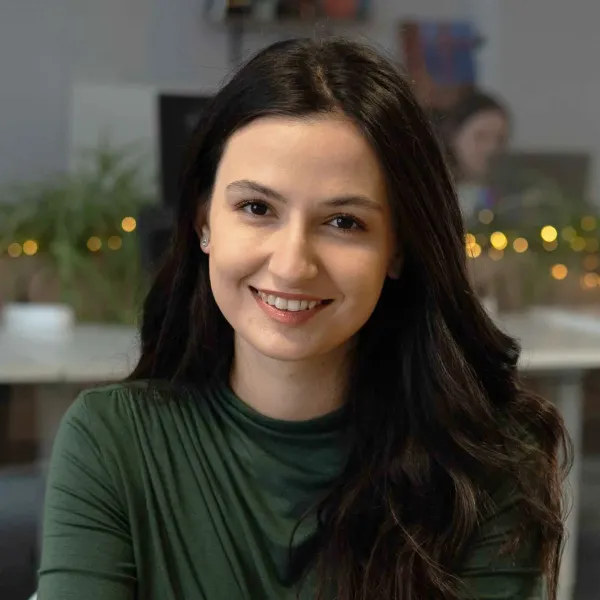

Tsvyatko Konov is Deputy CTO at Resolute Software, bringing more than 20 years of experience in technology and leadership. He leads teams tackling complex business challenges and believes successful software should deliver real value to both businesses and the people who use it.
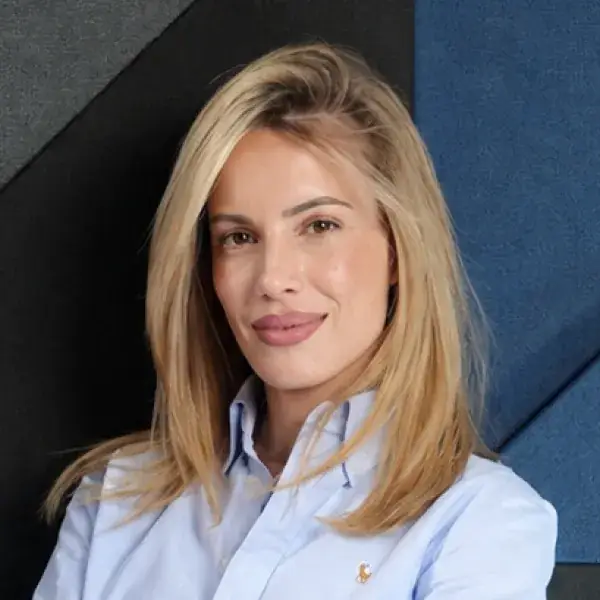
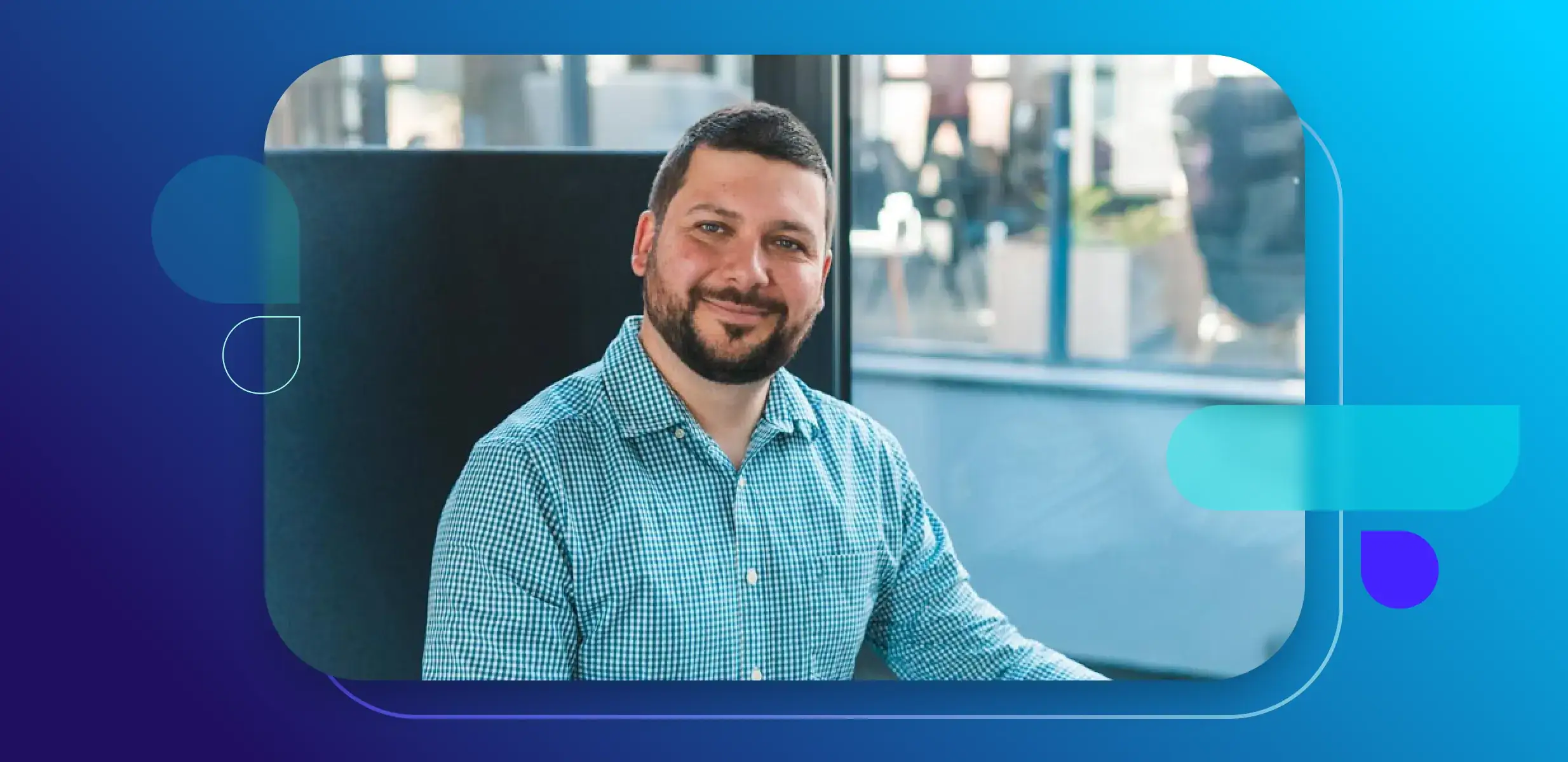
It's interesting to start chronologically. I even joke that, officially, my first job title was “shelf stocker” - no typo there 😊. I worked in a supermarket and handled all the incoming stock.
At the time, I was still a student and attending courses at NAIT (the National Academy for IT), back when it wasn't cool to be a programmer. Programmers were the people everyone associated with long beards, long hair, and a caffeine drip.
Ever since I was a child, my dream was to build things specifically as a software engineer. Even then, I'd come across many books on programming. Since access to computers was rare or very limited at the time, it was mostly reading, writing, researching, curiosity, and dreaming.
As it happened, I finished secondary school as an accountant. But I later found my way back into IT, so everything came full circle.
From there, I had the good fortune and pleasure of working closely with Svetlin Nakov at NAIT, where I spent many years working both as a programmer on a wide range of dynamic projects and as an instructor across various technologies.
Before long, I connected with Telerik. Our company was tasked with preparing around 120 strong candidates the company could potentially hire. It was an intense few months; 1,200 people entered the program, and we ran an extremely demanding set of courses. The format later evolved into Telerik Academy.
The company I worked for was acquired, and Nakov joined Telerik shortly after I did. At Telerik, we learned how world-class products are developed and how a small country like Bulgaria can secure major clients such as NASA and the World Health Organization. We achieved sustainable growth by leveraging local talent to compete with much larger companies.
After Progress acquired Telerik, I decided to explore opportunities outside Bulgaria.
I spent three years in Switzerland, working for a typical Swiss high-precision instruments company. It showed me how an organization can run like a well-oiled machine, and how a clear plan and genuine commitment from everyone can deliver consistent results for more than 120 years in an industry.
Eventually, I chose to return, influenced by the local mindset where career paths are often predetermined early in life, and long-term tenure at a single company is common. For me, ongoing challenges and growth are essential.
Looking back, I think one thing that will always remain essential to our profession is the hunger to keep learning something new. When you see a new problem, the instinct should be: “How do I solve this? What tools exist? And if there aren't any, how do I invent the tools I need to solve it?”
This mindset ultimately brought me back to Bulgaria and to Resolute.
I would have pursued additional elective courses in artificial intelligence.
My educational background is fairly interesting, since I graduated in applied mathematics. My grandparents were mathematics and physics teachers, and on the other side of the family there were teachers of Bulgarian language. So I grew up in a household where the exact sciences and education were the foundation - my path was, to some extent, already set. From that standpoint, mathematics was always a driving force for me, so ending up in that field felt natural.
Recognizing the potential in computer science and software engineering, I took nearly every software-related course available at my university.
I cannot envision myself in a completely different field. Although I have explored other paths, including secondary education in accounting and economics and considering an MBA, my primary interest remains unchanged.
I joined Resolute because many colleagues from Telerik were already there, and we shared a common approach to addressing business and technical challenges effectively and sustainably.
It was an interesting situation… I had already signed the contract before I even returned from abroad, and I was expected to start literally on my third day back.
In terms of what and how we build at the company, what we always look for and build on is people who are passionate and who genuinely care about what they do, people who see a problem and can't just let it be. Not “we'll solve it with some process eventually,” but “we want to solve it now.”
Very often, when we work with clients, especially larger companies, we notice that their core challenges stem from the fact that, at some point, they had visionaries and strategists who built a genuinely well-functioning system. But that was 10, 15, 30 years ago, and ever since, they've simply been keeping the machine running the same way. Meanwhile, the world around them has changed, and they suddenly find themselves unprepared to adapt.
That's where we come in. We step in and say, “Here's how this will get solved,” so we can genuinely bring you into the world that's happening around you right now.
Accordingly, we look for colleagues who want to join us - people who like that kind of environment and culture. People who prioritize results and success over process and titles. People whose sense of fulfillment comes from the value they've added to a client once a project is done, not from how many people report to them.
Because of this, our teams are much smaller than comparable teams elsewhere, because we look for experts who have built themselves up in their field and stay relevant to emerging challenges and the industry's technological possibilities. They keep learning, keep updating themselves, and in doing so build the company's capital. In a consulting company, that capital is, in fact, the expertise of every single consultant.
I'd tell them not to assume AI will take their job. I'd tell them to accept that AI is the best tool that's ever come their way and to look, on one hand, at how they can use it to become better at what they do and, on the other, at how they can develop the skills AI doesn't have.
Beyond that, I also follow, more broadly, some of the more active writers at major AI-related companies, since a lot of interesting challenges and solutions surface there too.
And naturally, last but not least - AI itself. One of the best things about it is that it functions as a search engine that can give you a consolidated answer on what's happening around the world on a given topic. Of course, always with a clear awareness that it can hide or deprioritize certain information, even when that information matters to you. Even so, it saves you time and gives you at least a starting point to keep searching.
Very interesting question…
Over the past 10 years, we've seen an incredible boom of rapid growth, an influx of new companies, and huge demand for talent. In other words, it was about headcount, simply because global demand was enormous.
Over the past two years or so, we've seen a shift in the opposite direction, where the question increasingly being asked is: “Should our development center stay here? Should it be somewhere else? Do we even need a development center at all?”
Or the question: “But we have AI now, why do we even need developers?”
What I expect to happen in Bulgaria is a move toward narrower specialization and more defined expertise profiles among developers. I expect additional areas of added value to emerge for these experts, whether in specific business verticals or technical challenges, that allow them to compete on a global level.
Besides my strong interest in programming and computers, my other passion was astronomy. That's why I own a telescope today. Stars and space have always been something I loved, very much.
Since we don't know what the world will look like in 20 years, the main things we try to teach our children are, first, to orient and adapt to whatever situation or landscape they find themselves in, regardless of what's happening around them. Second, to seek out collaboration.
I think that, going forward, we'll talk more and more about how one of the qualities that will be highly valued is connection and closeness between people. That's a counterbalance to much of the automation we can expect in workplace collaboration.
Probably, like a lot of other programmers, I'd become a gardener.
Staying in Switzerland. I had a great opportunity in Liechtenstein, but I decided to come back here.
This morning, on a project. I asked someone on the team to help me with something because I didn't have time.
AI already does part of my job. What I've actually noticed is that, because AI takes care of the part of my work that used to eat up my time, I end up doing more of the overall work myself.
From the past, I'd probably invite someone from the relatively recent past. I'd talk to John Goodenough. He's essentially responsible for a huge share of the technology we now take for granted. He worked on the development of RAM, which is hardware-related, and he also worked on lithium-ion batteries. He essentially helped build the foundational breakthroughs the modern technological world is built on.
If we're talking about someone today, it might be someone in Silicon Valley working at an investment fund. Someone who meets a lot of startups and sees what the vibe is. That way, I could actually get a sense of where we'll be in 10 years. Which way the wind is blowing, not just in business or technology, but as a society, since a large part of that momentum still originates there.
From the future, I'd invite someone who I expect will, sooner or later, spark a spiritual revolution in the East. I'm thinking possibly China. They've spent many, many years suffering under a direction of “communism with capitalist characteristics,” but on the other hand, their middle class is growing very fast. I expect that at some point that shift will happen, and I'd be very curious to talk to such a person, someone who would, in practice, become the foundation of a future society with major global influence.
If we went back 15 years, given my other passion, I'd probably do more kart racing. Formula 1 is a big weakness of mine. I drive karts recreationally, and if I could do more in that direction, that's what I would.
A shared effort!